Thinking about buying, selling, or converting a house for a residential care home in Daly City? You are not alone. With clear rules and steady local demand, the right property can serve seniors well and perform for owners and operators. In this guide, you will learn the basics of licensing, what kind of home works, the local approvals that matter, and a practical checklist to get started. Let’s dive in.
What a residential care home is
Residential care homes for older adults in California are commonly called RCFEs, or Residential Care Facilities for the Elderly. These homes provide non-medical assistance with daily living in a residential setting. They are not the same as nursing homes, which provide medical and skilled nursing care.
RCFE vs nursing home
RCFEs offer room, board, and help with daily needs in a home-like environment. Skilled nursing facilities provide medical and nursing services. The state outlines these differences through the Adult and Senior Care Program at the California Department of Social Services. You can review programs and public information on the state’s senior care licensing page.
Who licenses and inspects
In California, the Community Care Licensing Division at CDSS licenses and monitors RCFEs and other adult care facilities. Families and buyers can confirm a facility’s status and review inspection or complaint history using the CDSS Facility Search.
Why Daly City works for care homes
Daly City has an older-adult base that supports demand for assisted living. The most recent U.S. Census QuickFacts shows about 20.1% of residents are 65 or older. You can confirm the data on Census QuickFacts for Daly City.
Local logistics also help daily operations. AHMC Seton Medical Center sits right in the community, which reduces transfer times and gives families peace of mind. Learn more about services at AHMC Seton Medical Center.
Staff and visitors can access the area through BART and SamTrans, and shopping hubs like Serramonte and Westlake provide everyday convenience for supplies. These are practical advantages when you compare locations across the Peninsula.
Zoning and approvals in Daly City
Small licensed homes are protected
California law protects small licensed group homes. A licensed residential facility that serves six or fewer persons must be treated the same as a family dwelling for zoning purposes. Local governments cannot require special conditional use permits, different parking standards, or unique design rules that would not apply to a comparable home. Importantly, the operator, staff, and the operator’s family do not count toward the six residents. See the protection outlined in California Health and Safety Code section 1566.3.
What the city still requires
State protections do not replace local safety and business rules. You will still work with Daly City on building and fire clearances, and you will need to handle local business licensing. Start with the Daly City Business License Requirements. If you plan to run the business from a private home, ask about a Home Occupation Permit during that process.
For zoning or site-specific questions, contact the Daly City Planning Division. For fire and building safety, Daly City enforces the California Building Standards Code (Title 24). Check the city’s notes on adopted standards here: California Building Standards adopted by Daly City.
Larger facilities need more review
Facilities with seven or more residents typically follow a different path. They may require a conditional use permit, design review, and more extensive life-safety upgrades. If you are evaluating a larger site, plan a pre-application conversation with Planning and Building to understand the scope, cost, and timeline.
Property features that work
Layout essentials
Simple, safe circulation is key. Single-level homes or homes with elevator access reduce barriers for residents and staff. Prioritize private or semi-private bedrooms, at least one accessible bathroom per set of residents, a small staff office, secure medication storage, and a dining and common area that can seat your licensed capacity. These basics align with typical operational checklists shared through CDSS guidance on senior care licensing.
Accessibility standards to target
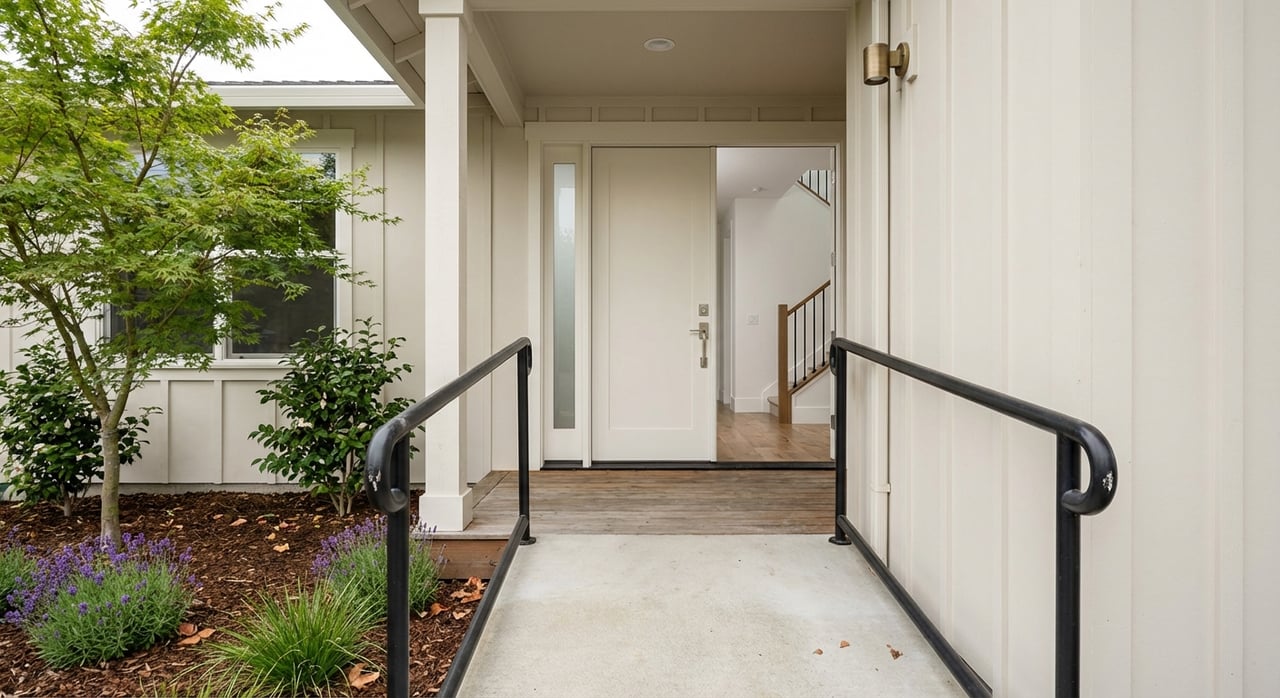
Use the 2010 ADA Standards for baseline dimensions when planning accessibility. Look for a zero-step entry or add a ramp with a slope of 1:12, widened doorways with about 32 inches of clear width, and a 60-inch turning circle where feasible in bathrooms and common spaces. Upgrades often include roll-in showers, grab bars, slip-resistant flooring, lever handles, and comfort-height toilets. You can reference the 2010 ADA Standards for Accessible Design when scoping improvements.
Fire and life-safety
Expect modern smoke and carbon monoxide detectors, clear egress paths, and alarm annunciation. Some projects may require sprinkler or alarm upgrades based on occupancy and layout. Daly City enforces Title 24 codes, and your final license will require a fire clearance. Start early with Building and Fire using the city’s adopted codes overview.
Site context that helps
Homes close to Seton Medical Center, pharmacies, and medical offices reduce transfer time and simplify coordination. Good access to BART or SamTrans helps with staffing and family visits. A quiet street, available off-street parking for staff shifts, and nearby retail for daily supplies are practical pluses in Daly City.
Red flags to avoid
Consider passing on homes with bedrooms too small to adapt for accessibility, or sites on steep slopes where ramping is not practical. Watch for unpermitted past conversions, thin parking options that will strain staff shifts, and properties near persistent noise or industrial uses that may affect residents.
Licensing timeline and steps
New facility applications often take 90 to 120 days after you submit complete plans to CDSS, though local clearances and readiness can extend the process. Review the state’s application guidance through the CDSS Centralized Application Units so you can plan financing and staffing with realistic timing.
Due diligence checklist
Use this short list to move from idea to action:
- Confirm your license path. Use the CDSS Facility Search to check an existing license or to study inspection history for comparable homes.
- Call Daly City early. Contact the Planning Division to flag any zoning questions, then coordinate with Building and Fire on inspections, fire clearance, and certificates of occupancy.
- Handle local business licensing. Review the Business License Requirements and ask whether a Home Occupation Permit applies to your operation.
- Inspect for accessibility. Use the 2010 ADA Standards as a checklist for door widths, turning space, ramp feasibility, and bathroom layout. Bring in an architect or contractor with accessible design experience.
- Prepare your state application. CDSS requires a plan of operation, infection control plan, administrator training and certificates, background checks, and other documents. The CDSS application guidance details each step.
- Verify insurance and financials. Confirm coverage for licensed care uses, including liability and workers’ compensation. If you plan to lease to an operator, define the allowed bed count and any licensing conditions in the agreement.
- Check CC&Rs or HOA rules. State law limits discriminatory restrictions against small licensed homes. Review California Health and Safety Code section 1566.3 and consult an attorney for HOA contexts.
- Vet operators. Ask for references, prior licenses, staffing models, and sample resident agreements before you commit to a sale or lease.
How a local agent helps
A residential care property is a specialty asset. A local agent experienced in RCFEs can balance residential comps with care-home sales, estimate conversion costs, and flag regulatory exposure. That creates a clearer price and timeline for you.
A seasoned agent also coordinates with Planning, Building, and Fire, compiles city contacts, and keeps your file organized for licensing. On the marketing side, they position the property to reach RCFE operators and investment buyers, and they prepare disclosures that summarize license status, inspection history, and completed upgrades. When selling, they help screen buyers to confirm they understand the licensing path and have the capacity to operate.
Next steps
If you are exploring a care home purchase, sale, or conversion in Daly City, start with a quick feasibility call. We can map your property’s layout against accessibility targets, outline the city and state steps, and set a timeline you can trust. For clear guidance and a tailored plan, connect with Vilma Palaad today.
FAQs
What is an RCFE in California?
- An RCFE is a Residential Care Facility for the Elderly that provides non-medical help with daily living in a residential setting, licensed by CDSS as part of its Adult and Senior Care Program.
Do six-bed care homes need special zoning in Daly City?
- Under California law, licensed homes serving six or fewer are treated like family dwellings for zoning and cannot face unique local zoning hurdles; see Health and Safety Code section 1566.3.
What local approvals are still required before state licensing?
- You will need Daly City building and fire clearances and a city business license; start with the Business License Requirements and confirm site specifics with the Planning Division.
How long does RCFE licensing take in California?
- CDSS notes that complete applications often take about 90 to 120 days, though local inspections and readiness can extend timelines; review the CDSS application guidance.
How can I check an existing facility’s license and history?
- Use the CDSS Facility Search to verify license status and read inspection or complaint reports.
What property features help pass accessibility checks?
- Aim for a zero-step entry or 1:12 ramp, 32-inch clear door widths, accessible bathrooms with grab bars and turning space, and slip-resistant flooring; see the 2010 ADA Standards.